Six Days In: What Australia's First Week Without Surcharges Actuall…

It's been four days since card surcharging became illegal across Australia. No countdown left, no "coming soon", just a Thursday morning where, for the first time in years, the total on the screen matched the price on the menu.
Here's what the first few days have actually looked like.
The receipts got shorter
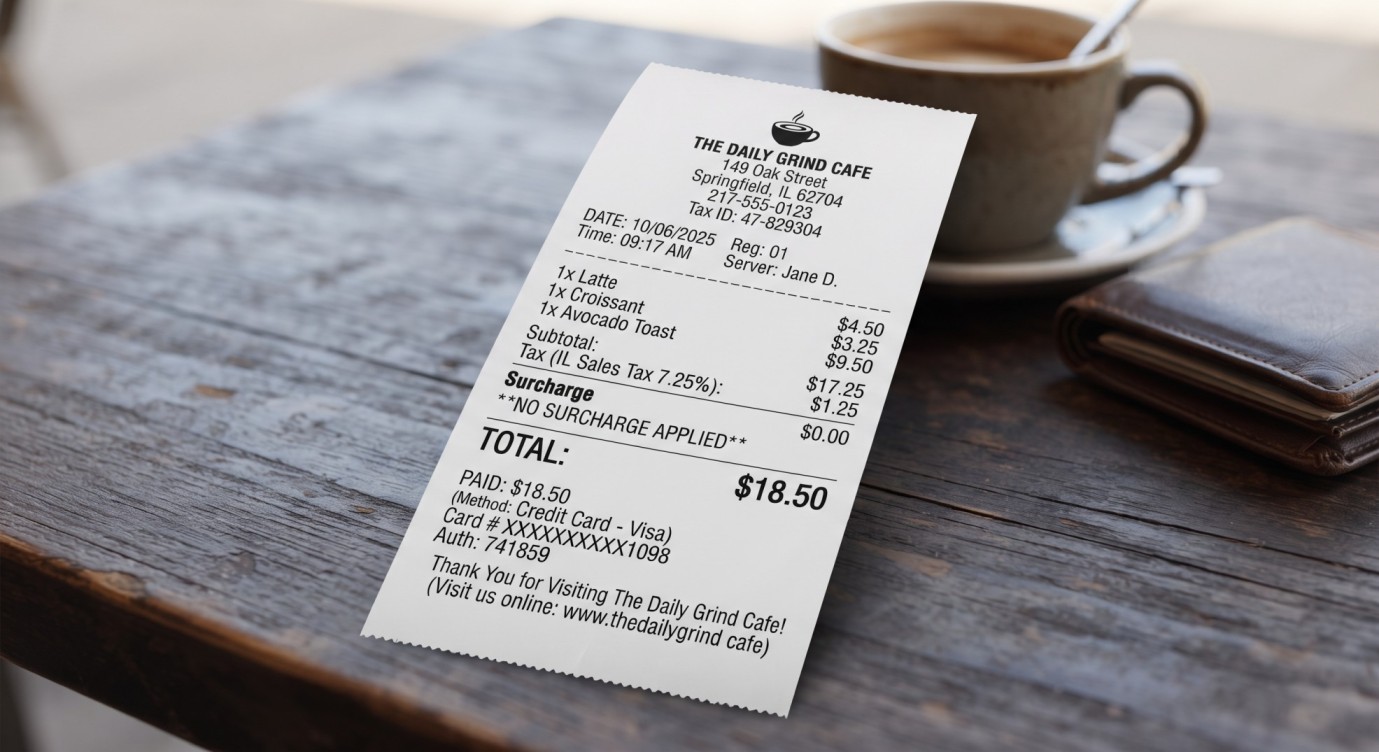
The most immediate, visible change is the smallest one: no more line reading "card surcharge 1.5%" sitting between the subtotal and the total. It sounds trivial, but the reaction from customers this week has been consistent - a lot of people didn't realise how much that line had been quietly training them to reach for cash instead of card. Without it, tapping a card just feels like tapping a card again.
Businesses split into two camps, fast
By Thursday afternoon it was already obvious which businesses had planned for this and which hadn't.
The ones who'd thought it through had already made a decision - a small, clearly-explained price adjustment, an absorbed cost they'd budgeted for, or a shift to a lower-cost way of accepting payments, and it barely registered with customers. A sign at the counter, a line in a social post, done.
The ones who hadn't were noticeably scrambling. A few tried surcharging anyway in the first 48 hours, either from confusion about the start date or hoping nobody would notice — both a bad look and, now, simply against the rules. Others went quiet on pricing altogether and are clearly still working out where the cost is going to land, which customers have started asking about directly.
The cost didn't disappear, it just went looking for a new address
This was the predictable part, and it's already playing out. Surcharges didn't cover nothing, for a lot of small businesses, they were covering a real card acceptance cost. That cost is still real this week; it's just no longer visible on the receipt. Expect to see it show up gradually over the next month or two, mostly as small, unlabelled price movements rather than any dramatic single jump.
The businesses handling this best are the ones who used the lead-up to actually reduce that cost - moving some volume onto payment methods that don't route through a card network in the first place, rather than just deciding whose margin absorbs it.
What we're seeing on Pyng specifically
The first week has been the busiest in Pyng's history, and the pattern is a clear one: customers who'd normally default to card are noticeably more willing to try a new way to pay right now, because the old "just surcharge and move on" habit isn't available anymore. Merchants who added Pyng in the weeks before the ban are the ones best placed for it - not because the ban created some special advantage for them, but because zero transaction fees were already true for Pyng before 1 October, ban or no ban.
What to actually watch over the next month
- Whether "quiet" price rises stay quiet. A modest, well-explained adjustment tends to land fine. An unexplained one, especially from a business that clearly used to surcharge, will get noticed and questioned.
- Whether card acceptance costs actually come down, or whether businesses simply absorb what used to be visible, without changing anything about how they accept payments.
- Whether more businesses start offering a genuinely lower-cost way to pay, rather than treating the ban as something to survive rather than an opportunity to fix the underlying cost.
The bottom line, six days in
The surcharge ban did exactly what it was designed to do: it removed a line from the receipt. What happens next - whether that cost actually shrinks or just moves somewhere less visible depends entirely on what businesses do with the weeks that follow. The early signs are genuinely encouraging, but this is a story that's really only just started.
Haven't made the switch yet? Apply for Pyng - zero transaction fees, always, ban or no ban.