The cost no one wants to pay: meet Sam the salon owner

Meet Sam. Sam runs a small hair salon, charges $60 for a cut, and until 1 October added a 1.6% card surcharge at the till. (Sam is made up, and the numbers are adapted from the ACCC's own haircut example.)
Three weeks after the surcharge ban, Sam is staring at the card terminal with one question: where did that 96 cents go?
Let's follow the money.
Clue one: the surcharge was never "extra"
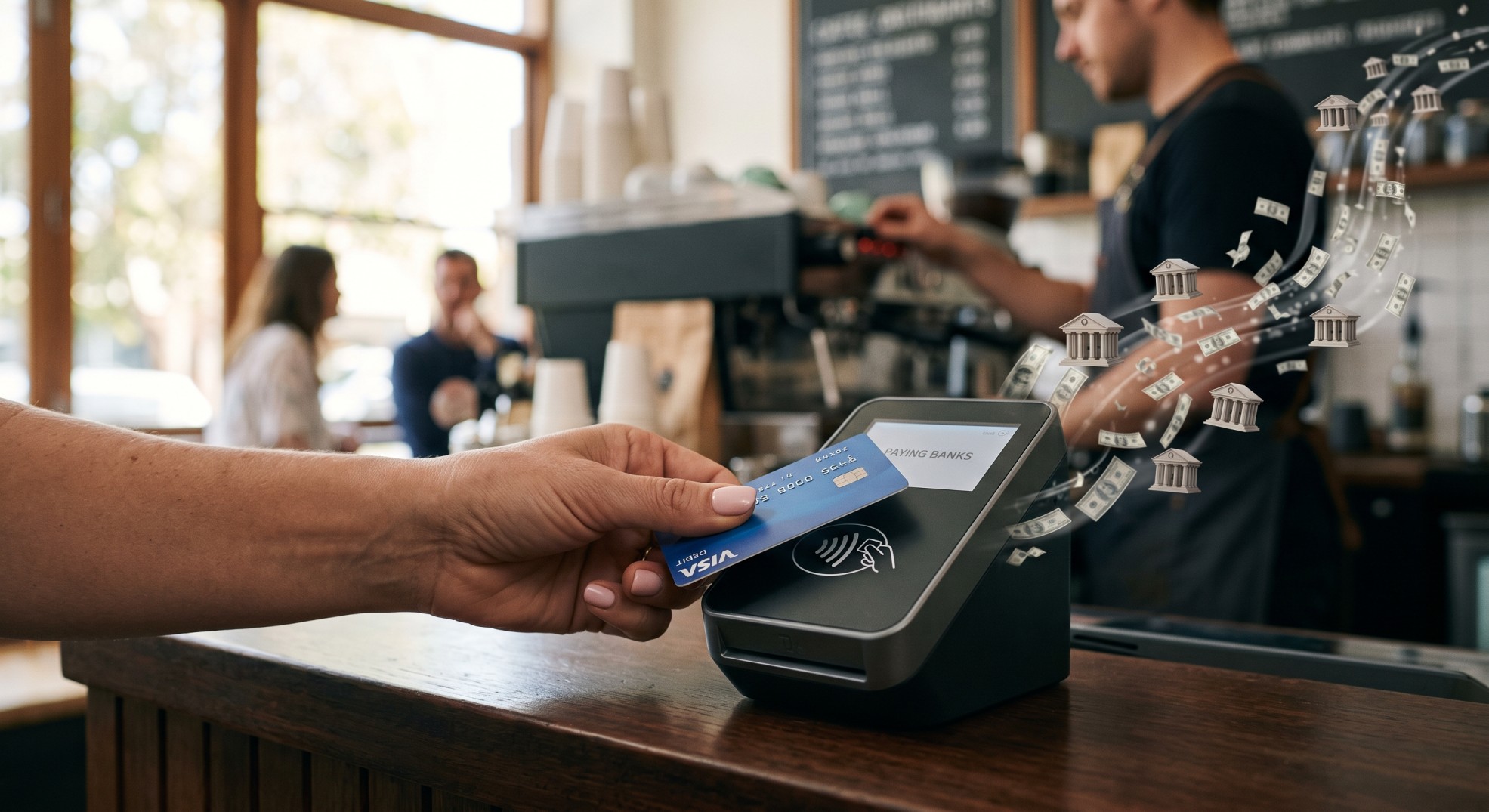
For years, that 96 cents on the receipt felt like a fee Sam was charging. It wasn't really. It was Sam recovering a cost, the price of letting a card network sit between the customer's bank and Sam's.
On 1 October, the line on the receipt disappeared. The cost did not. It's still there every time a card taps, quietly coming out of the $60.
Clue two: the price tag has a new job
The ACCC has given the example of a salon charging $60 plus a 1% surcharge simply charging $60.60 instead. Sam's surcharge was a bit higher, so Sam's new price tag reads $60.96. Same money, different label.
So Sam has a choice, and it's a tense one. Bump the price to $60.96 and hope nobody notices? Keep it at $60 and quietly lose 96 cents on every card payment? Either way, the cost is still in the room. It just has a new address.
Clue three: the one move nobody mentioned
Here's where the story gets interesting.
The ACCC has also said businesses can still offer discounts for particular payment methods, such as cash or PayID, as long as the pricing is displayed properly. The ban stops Sam charging extra for cards. It does not stop Sam rewarding customers for paying in a way that costs less.
Which raises a better question than "who absorbs the 96 cents?" What if the 96 cents never existed in the first place?
The plot twist: a payment with no middleman
Card fees exist because a network sits in the middle. Take the network out, and there's nothing left to charge.
That's how Pyng works. The customer pays straight from their bank account to Sam's, over Australia's own NPP. No card network, so zero transaction fees. And because there's nothing to pass on, there's nothing to surcharge, ban or no ban.
For the customer, the best part is a bonus Sam didn't have to build: every Pyng payment earns Pyng Pops automatically, at 100 Pops to the dollar.
What Sam does next
Sam isn't ripping out the card terminal. Plenty of customers will keep tapping a card, and that's fine. But Sam does three things this week:
- Works out the real number. What do cards actually cost across a month of sales?
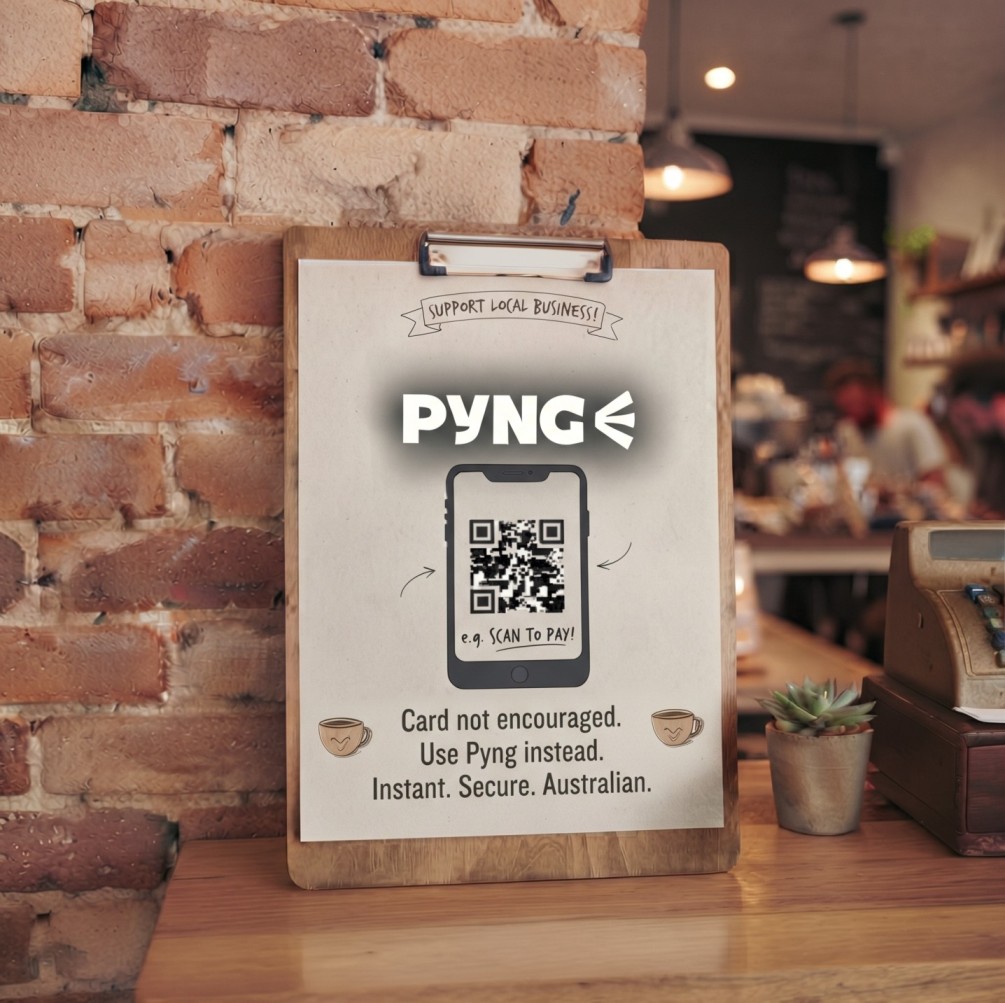
- Makes Pyng an easy choice. A QR code at the counter and a quick mention when someone's paying.
- Tells regulars what's going on. A short, honest note beats a silent price change every time.
The mystery isn't solved by finding someone to blame for the 96 cents. It's solved by not paying it.
The bottom line
The surcharge ban made the receipt cleaner. It didn't make cards cheaper to accept. The businesses that win from here won't be the ones who found a clever place to hide the cost. They'll be the ones who got rid of it.
Ready to be your own Sam? Apply for Pyng and see how a payment with no middleman works for your business.